
Neuro Topics - Usher Syndrome
SEARCH OTHER RESEARCH AREAS

November 22, 2024
New research from David Corey and colleagues, first author Maryna V Ivanchenko, delivered a corrected version of the faulty gene that causes Usher syndrome — PCDH15 — and was able to restore hearing in mouse models and also showed potential in retinal organoids and nonhuman primates for improving vision.
Original article in: Journal of Clinical Investigation >
May 11, 2023
HMS News article on new research from David Corey, Artur A Indzhykulian, and colleagues, first author Maryna Ivanchenko. Using mice, the team designed a “mini gene” that could in the future be developed into a therapy for Usher Syndrome type 1F, a severe genetic condition that causes blindness and deafness.
Original article in: Nature Communications >
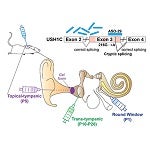
September 8, 2020
Gwenaelle Geleoc shares her lab's new research into improving hearing and balance in mice. They targeted an Acadian human mutation in a gene essential for hearing and vision using local applications of antisense oligonucleotides.
Original article in: Molecular Theory >