
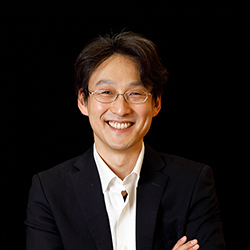
 Hiroki R. Ueda, MD, PhD
Professor, Systems Pharmacology,
University of Tokyo;
Department of Systems Biology,
Kurume University;
National Institutes for Quantum Science and Technology, Japan
Dr. Ueda graduated from the Faculty of Medicine at the University of Tokyo in 2000 and earned his Ph.D. there in 2004. He began his career at the RIKEN, advancing from team leader to project leader and later group director. Since 2013, he has served as a professor at the Graduate School of Medicine, University of Tokyo, and, since 2024, he has also served as a professor at Kurume University and currently holds multiple appointments, including a visiting professor at the University of Oxford and an affiliate professor at the University of Tokyo’s Graduate School of Information Science and Technology. Dr. Ueda’s work has earned him numerous honors, including the IBM Science Award, the Tsukahara Award, the Yamazaki-Teiichi Prize, the Ichimura Prize, and the Setsuro Ebashi Prize. Dr. Ueda is conducting research that redefines our understanding of sleep regulation. Challenging the traditional view that sleep homeostasis is driven solely by “sleep substances,” Dr. Ueda proposes that the history of “wakefulness substances”, particularly calcium, plays a central role. Building on Dr. Ebashi’s discovery of calcium as a signaling substance, his team developed innovative technologies like the Triple-CRISPR method and CUBIC tissue clearing to investigate how calcium and calcium-dependent phosphorylation regulate sleep homeostasis. This work also led to the WISE (Wake Inhibition Sleep Enhancement) mechanism, offering a compelling alternative to the Synaptic Homeostasis Hypothesis and shedding new light on the molecular links between sleep and synaptic plasticity.