
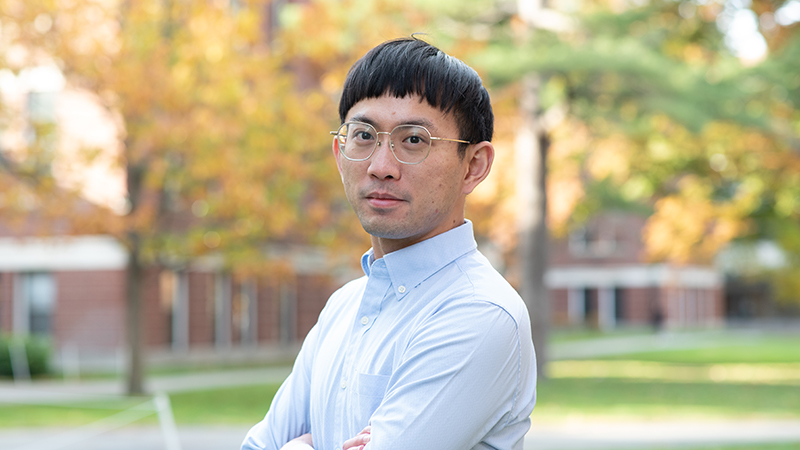
Yi-Chieh Huang
Postdoctoral Fellow,
Lab of Adam Cohen, Departments of Chemistry and Chemical Biology and Physics,
Harvard Cambridge Campus
Our brain is made up of many regions that work together to handle everything from sensing the world around us to forming memories and controlling body movement. My research aims to understand how these regions coordinate their activity in awake, task-performing mice. Using an all-optical technique, I can record the brain’s electrical signals across large areas while also using light to precisely control neural activity.
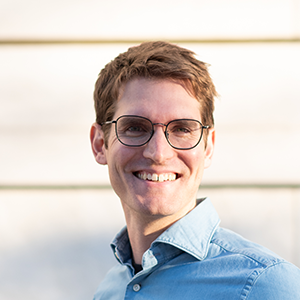
Jonathan Green
Assistant Professor Dept. of Molecular Biology, Massachusetts General Hospital
Dept. of Genetics, Harvard Medical School
We want to understand how we learn from our mistakes. Recognizing what we did wrong is an essential part of learning – just imagine learning a new song, but without realizing you had played a wrong note. This is true not only for music, but for much of what we learn throughout our lives – from walking and talking to recognizing objects and faces. Our goal is to uncover how the brain detects errors and uses this information to guide learning.
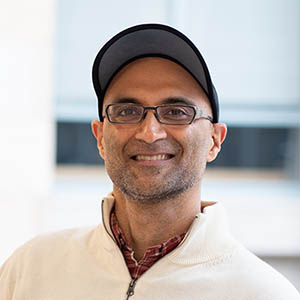
Satpreet (Sat) Singh
Postdoctoral Fellow,
Lab of Kanaka Rajan Department of Neurobiology,
Harvard Medical School
I build "virtual model organisms” with artificial bodies and artificial brains that are trained to behave like real model organisms, such as insects and fish, in simulated worlds. The activity of these artificial brains can be studied in silico to help us understand how neural systems turn sensory information into decisions and complex natural behavior. Such "digital twin" models can complement real-world experiments that are challenging, expensive, or tedious – giving us a faster entry point to begin exploring the most promising hypotheses in the lab.
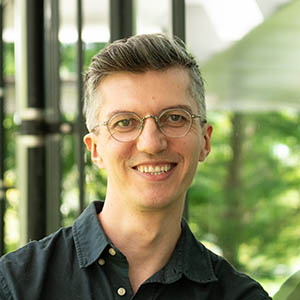
Almir Aljović
Postdoctoral Fellow, Lab of Jia Liu,
Harvard John A. Paulson School of Engineering and Applied Sciences,
Harvard Cambridge Campus
Our central nervous system has a very small capacity to regenerate. However, it has an amazing ability to rewire its circuits and adapt, whether after a traumatic injury or while we are learning a new skill. To study brain plasticity, I’m building autonomous AI systems that can help discover new patterns in complex behaviors and reveal which strategies of brain reorganization are most effective.
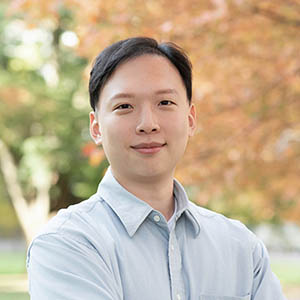
Byung Hun Lee
Postdoctoral Fellow Lab of Adam Cohen,
Harvard
When you look at a neuron, the tiny cell body is just the tip of the iceberg. A tangle of branches called dendrites comprise a large volume of the neuron, acting like antenna for synaptic inputs. We do not fully understand how these long, thin, ion-channel-rich ‘noodles’ contribute to neural computation. I’m using optical imaging to explore this question, watching in real time the fast electrical signaling occurring in dendrites as they process information.
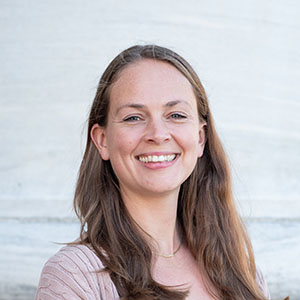
Hannah Farnsworth
Graduate Student Lab of Humsa Venkatesh,
Brigham and Women's Hospital and Harvard Medical School
In the past, primary brain tumors were viewed as diseases that merely invade and destroy brain tissue. However, researchers now recognize that these tumors actually integrate into the brain’s circuitry as they grow and progress. Building on these insights, my research aims to uncover how brain tumors integrate into neural networks and influence cognitive processes such as learning and behavior.
Image Credit:
MERFISH image of the human brain, showing RNA molecules expressed from 4,000 genes by various colors in individual cells. Image courtesy of Rongxin Fang (Lab of Xiaowei Zhuang, Harvard).